Complexion in Police Clearance and Other Confusing Form Fields
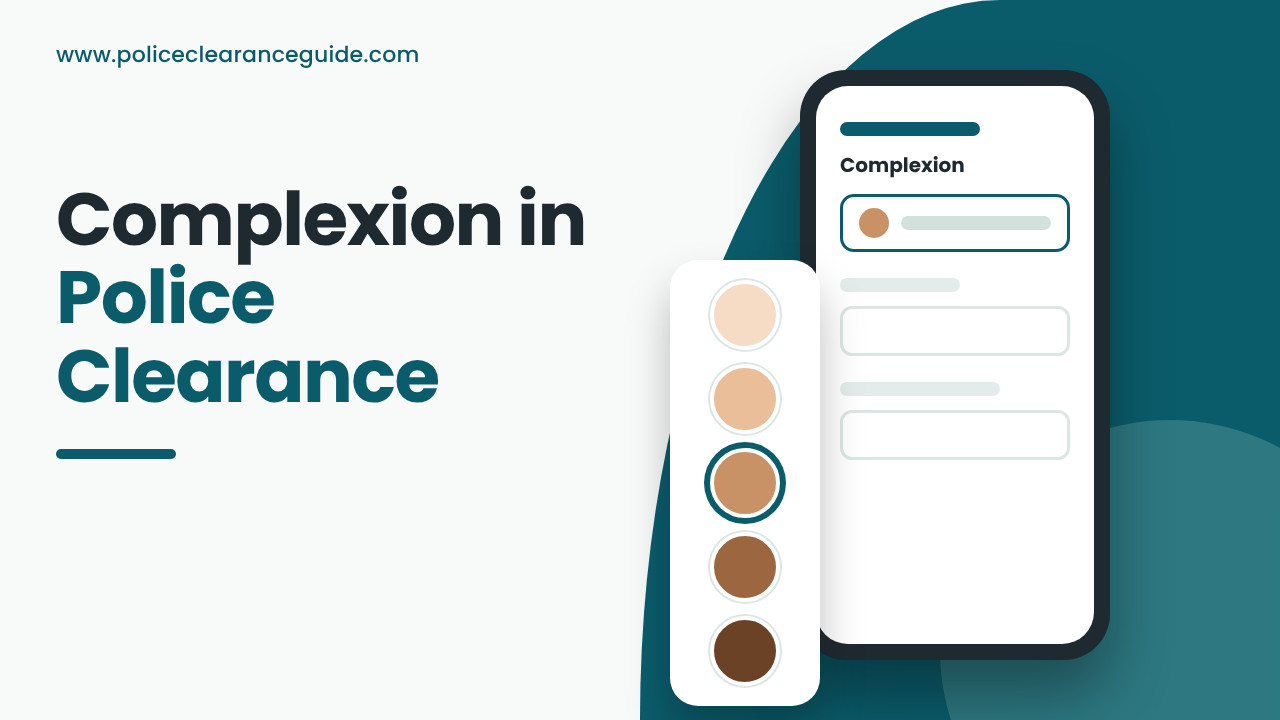
Complexion in police clearance forms means your natural skin tone, chosen from a short list in your online profile. Pick the shade closest to your everyday skin tone; there’s no wrong answer as long as it’s honest. The same profile also asks for identifying marks, a qualifier and a few other details that confuse first-timers, so this page explains each one.
We checked these profile fields on the portal on 29 October 2026.
These fields sit on the Edit Profile screen of the PNP’s portal. Since this is an independent help site with no PNP ties, the portal’s own wording always wins if it differs from ours.
Why the physical details on your profile matter
Most of your profile identifies you on paper: name, birth date, address. In contrast, the physical details describe you as a person. Together with your photo and fingerprints, they help a verification officer tell you apart from someone with the same name.
That matters when the records check returns a HIT. A namesake match is common, and a complete, honest profile gives the officer more to compare. So the time you spend on these boxes can shorten a delay later.
What each tricky field means
Here’s a quick reference for the fields people ask about most:
| Field | What it means | Example |
|---|---|---|
| Complexion | Your natural skin tone | Pick the closest shade on the list |
| Identifying marks | Permanent marks others can see | “Mole on left cheek” or “None” |
| Qualifier | The suffix in your name | Jr., Sr., II or III; blank if none |
| Height and weight | Your current measurements | Use the units the form asks for |
| Educational attainment | The highest level you finished | High school graduate |
| Occupation | What you do now | Student, sales clerk, unemployed |
| Spouse given name | Your husband’s or wife’s first name | Only if you’re married |
What is complexion in police clearance?
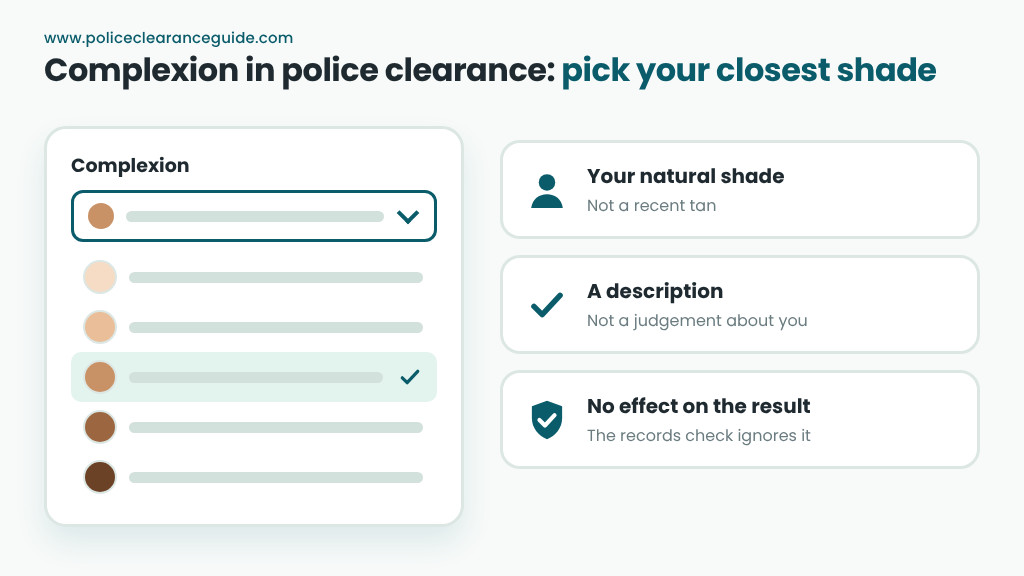
It’s your skin tone, nothing more. The complexion meaning in police clearance forms is descriptive, not a judgement, and it doesn’t affect the result of your records check. When you choose complexion in police clearance profiles, think of your natural shade, not a tan from last week’s beach trip.
If you’re torn between two options, pick the one most people would use to describe you. Then move on. It isn’t worth a long pause.
Why not just copy your ID photo? Because the clearance photo is taken fresh at the station, while the complexion box is your own short description. They work together, so neither has to be perfect.
What is identifying marks in police clearance?
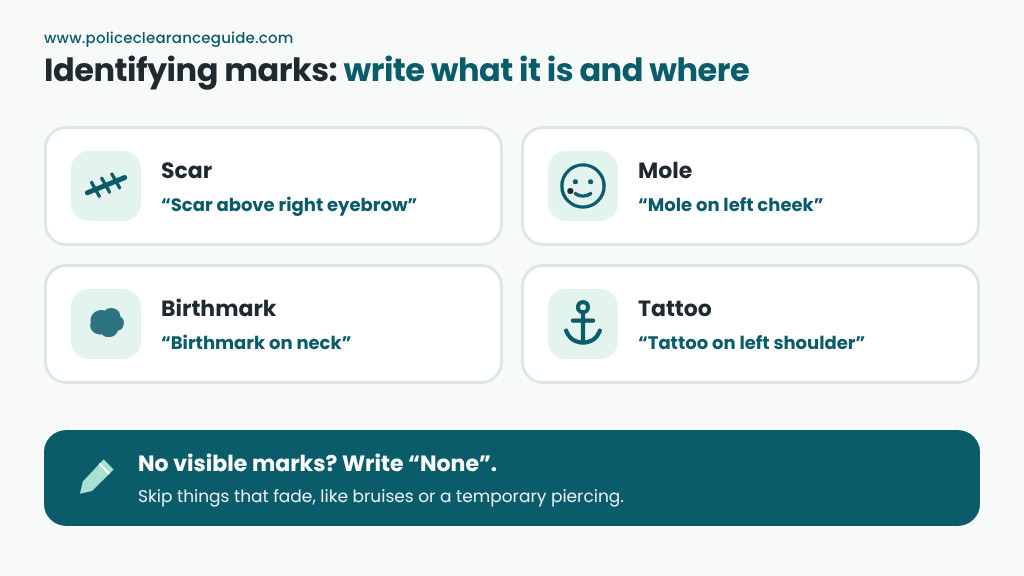
Identifying marks in police clearance profiles are permanent features that someone could see and use to recognise you. Think scars, large moles, birthmarks and tattoos. Write a short note with the location, such as “scar on right forearm.”
Here’s an identifying marks in police clearance example list:
- “Tattoo on left shoulder”
- “Birthmark on neck”
- “Scar above right eyebrow”
- “None”
Don’t list things that come and go, like a bruise or a temporary piercing. If you have no visible marks, simply write “None.”
What is qualifier in police clearance?
The qualifier is the part after your name that sets you apart from a parent or relative, such as Jr., Sr., II or III. So the qualifier meaning in police clearance forms is the same as on your ID. Put it in its own box, never inside the first-name field. If your ID has no suffix, leave the qualifier blank.
Other fields people ask about
A few more boxes raise questions now and then:
- Educational attainment in police clearance profiles: your highest finished level, such as “college graduate.”
- Occupation in police clearance profiles: your current work, or “student” or “unemployed.”
- Spouse given name in police clearance profiles: your spouse’s first name, if you’re married. Single applicants leave it blank.
- Birth cert registration in police clearance profiles: if your form asks for birth registration details, copy them from your PSA birth certificate.
- CTC no in police clearance profiles: this is a cedula number. Fill it in only if you have a current cedula, because the national clearance doesn’t require one.
Our page on the application form walks through the rest of the profile, section by section.
When your police clearance details change
Profiles aren’t set in stone, and they shouldn’t be. Update yours before your next application whenever something changes:
- You married. Update your civil status and the spouse field. Your name should still match the ID you’ll bring, so change it only when your ID changes too.
- You got a tattoo or a new scar. Add it to identifying marks, with its location.
- Your weight changed a lot. Enter your current weight.
- You finished school or changed jobs. Update educational attainment and occupation.
These edits take a minute, and they keep the printed clearance accurate. They also help if a namesake ever triggers a HIT, since current details are easier to compare.
How to fill in these fields without slowing your release
A few habits keep this part quick:
- Keep your valid ID beside you, since your name and suffix must match it.
- Answer the physical fields honestly and briefly.
- Update your weight, marks and civil status whenever you renew.
- Read the whole profile once more before you save it.
Quick answers
Ano ang complexion sa police clearance?
It’s your natural skin tone. Pick the shade on the list that matches you best.
Can I leave identifying marks blank?
Write “None” if you have no visible marks, rather than skipping the box.
Does my complexion choice affect a HIT?
No. A HIT depends on whether your details match a record, and the physical fields only help the officer tell people apart.
Can I change these details later?
Yes. Update your profile before your next application or renewal. Our HIT explainer shows why accurate details help.
Your next step
Open Edit Profile with your ID in hand and fill in these fields the way the table shows. When you’re done, book your slot, and see our main police clearance guide for everything that follows.
