
How Much Is a Police Clearance in the Philippines?
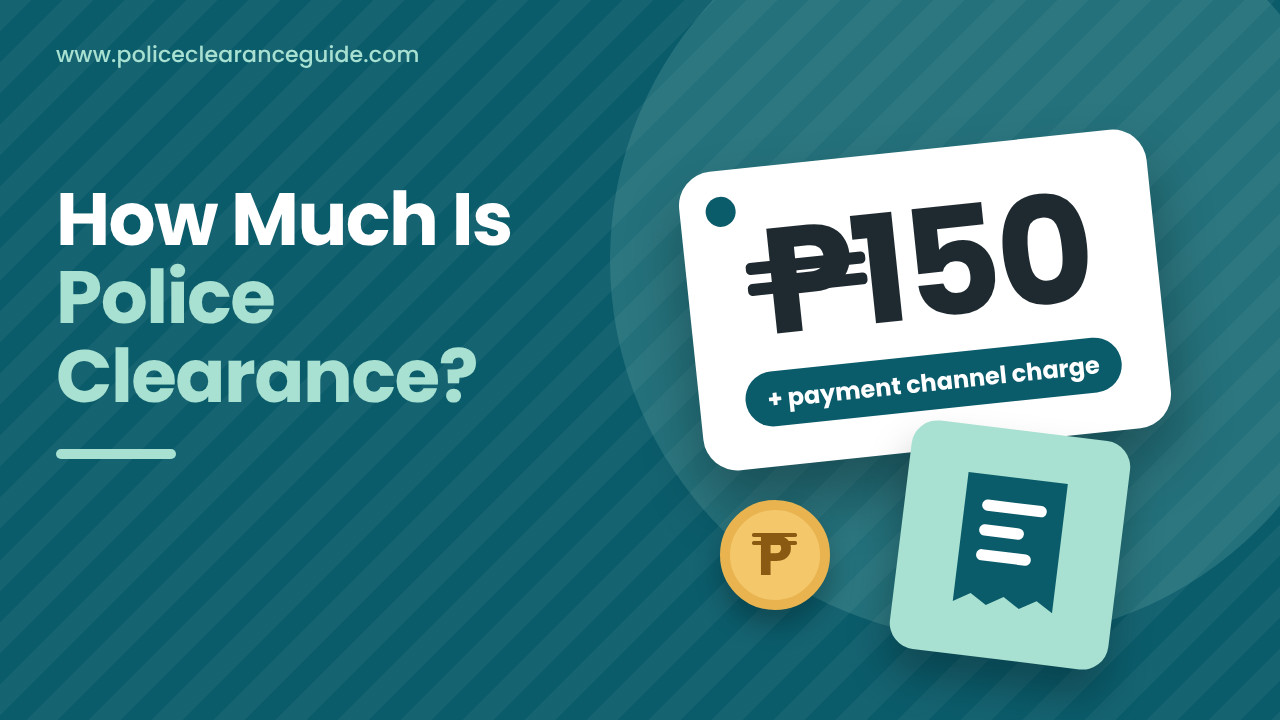
₱150, plus a small payment charge. If you’re wondering how much is police clearance in the Philippines, that’s the total for most applicants, and first-time jobseekers pay nothing for their first one.
Fee checked on 29 October 2026, in the PNP’s own how-to-apply guide on pnpclearance.ph.
In plain terms, the PNP charges a flat ₱150 for the national police clearance. Your payment channel then tacks on a small convenience fee, so your final amount depends on how you pay.
Who pays the police clearance fee?
Almost everyone does. The same ₱150 applies to a first application, a renewal with a station visit and a renewal without one. Also, it doesn’t change with your city, your purpose or the station you pick, so the national police clearance price is the same in Baguio as in Davao.
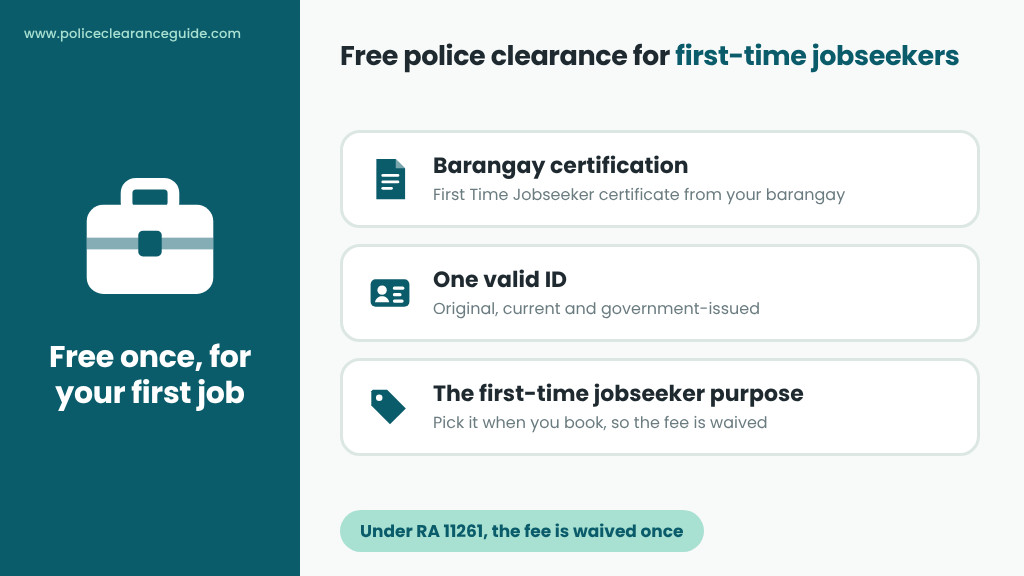
There’s one big exception. Republic Act 11261 makes one clearance free for people hunting for their first job. You’ll need your barangay’s FTJS certification, the matching purpose on your booking, and the original paper on the day. The benefit works once only.
Local clearances are a separate matter. A town’s own station sets its own fee for a local clearance, so ask that office directly. We cover that paper in our local clearance explainer.
One reminder: we’re an independent site and don’t handle payments. Pay only through the official portal.
How the payment works
You don’t pay at the station, though. Instead, the money goes through LandBank’s ePayment page right after you book:
- Save your booking on the portal and note the reference number.
- Click the payment link. The portal opens LandBank’s ePayment page.
- Pick a channel: a LandBank or BancNet card, or Cash Payment for partners like GCash, Maya, 7-Eleven and Bayad Center.
- Read the total on the screen. It shows the ₱150 and the channel’s charge together.
- Pay, then save the confirmation slip or the electronic receipt.
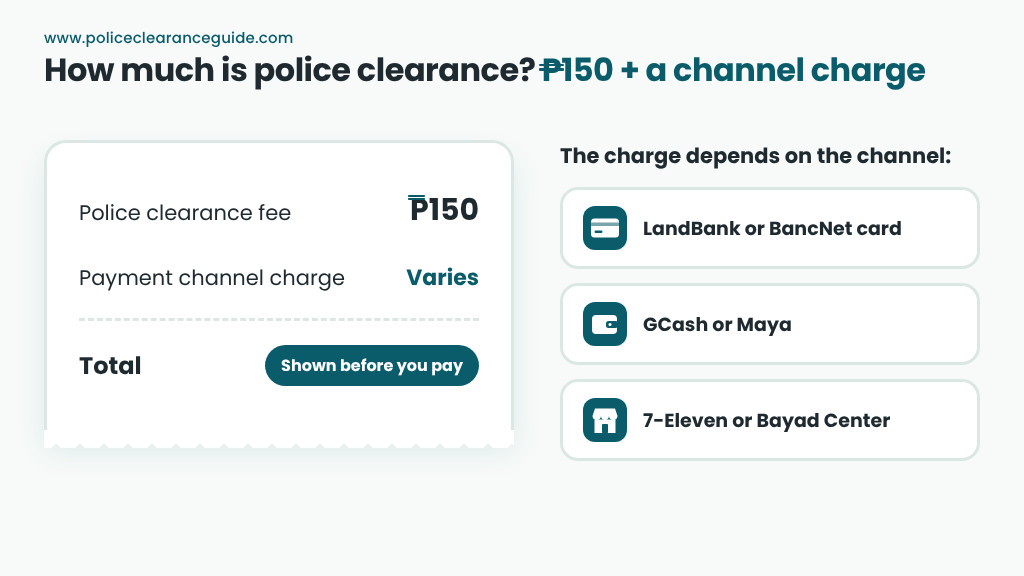
Your booking shows as Pending until the payment posts. Here’s how the channels usually behave:
| Channel | How you pay | When it posts | Good to know |
|---|---|---|---|
| LandBank or BancNet card | On the ePayment page | Usually within minutes | Have your card and phone for the one-time PIN |
| GCash or Maya | In the app, through Cash Payment | Often quick, sometimes later | Screenshot the final screen |
| 7-Eleven or Bayad Center | At the counter, with a payment reference | Can lag behind | Keep the printed slip |
Because store payments can lag, pay well before the cut-off. The portal can cancel any booking that’s still unpaid two banking days before the slot.
What changes the police clearance price?
Four things can move the amount you actually spend:
- Your payment channel. Each one adds its own convenience fee, and the page shows it before you confirm.
- The jobseeker exemption. The right purpose and the barangay certification bring the cost to zero, once.
- A missed slot. Fees aren’t refunded, so missing your appointment means paying again for a new booking.
- A booking slip. The fee doesn’t come back if you book the wrong purpose, so one mistake can mean paying twice.
What about the ₱200 talk? Mid-2026 news reports said the PNP wanted a ₱200 fee: ₱30 more for documentary stamp tax and ₱20 for operations. As of 29 October 2026, the PNP’s guide still lists ₱150, so that’s the police clearance fee you pay today.
How much police clearance costs if you pay by GCash
GCash works through the same LandBank page. Choose Cash Payment, pick GCash from the partner list, and follow the steps on screen. Your police clearance amount is the ₱150 plus that channel’s charge. Then screenshot the confirmation, because it’s your proof of payment at the station.
Magkano ang police clearance ngayon?
₱150 for the clearance itself, plus the charge of the channel you choose. So, magkano bayad sa police clearance? ₱150 and that small add-on, which the payment page shows before you confirm.
May bayad ba ang police clearance?
Yes, except for one free clearance under the first-time jobseeker law. After that, every new application or renewal costs the regular fee.
The real police clearance cost of a station visit
The fee is only part of the bill. Your fare to the station, a few hours away from work and maybe a snack in the queue all count. So picking a station near your office can save more than any payment channel will. A HIT can also mean a second trip, which is one more reason to book somewhere easy to reach. Our page on choosing any station shows why your address doesn’t limit you.
Is it cheaper to renew?
No. A renewal costs the same as a first application, whether or not you visit a station. Our renewal guide shows both routes.
Is there a rush fee if you need it fast?
No. The portal has no rush or express fee for the national clearance. So if you need it quickly, book the earliest open slot and pay by card, because card payments usually post within minutes. Then arrive early on the day, since the queue, not the payment, is what usually takes time.
Do you pay anything to verify a clearance?
No. Employers and agencies run the check for free on Verify Clearance, a public page on the portal, using the last name and the transaction number. So there’s no account and no fee involved.
Does the online price differ from paying in person?
There’s no separate in-person rate for the national clearance. The police clearance online price is the only price, because every booking is paid through the portal before you appear.
Your next step
Before you pay, run through this quick list:
- Confirm the purpose, especially if you qualify for the free clearance.
- Check the station, date and session on the summary screen.
- Pick a payment channel you can finish today.
- Screenshot the total and the confirmation.
Then follow our full application steps for what happens next, or browse the main police clearance guide for fees, IDs and validity together. The PNP’s own how-to-apply guide lists the official fee.
